Strategic dialogue with African leaders and stakeholders leveraging public-private partnerships for the acceleration of the 2030 agenda:
The public-private partnership has become a trend in Senegal in the context of a change in regime, with the departure of the socialists after 40 years in power and 2 presidents of the republic, along with administrative habits and dwindling internal resources. From March 2000 to September 23, 2023, a period of 23 years and under 2 liberal presidents, PPPs have positioned Senegal among emerging countries according to Rostow’s classification (traditional society, preconditions for take-off, take-off, progress towards maturity, and the era of mass consumption.) The image, especially of the capital Dakar, has drastically changed due to the construction of major infrastructures, mostly resulting from a PPP contract.
For a country ranked 170 out of 193 according to the Human Development Index, Senegal struggles to keep up with the SDGs. Achieving the 2030 agenda will be challenging at this pace. Added to this is the horror of departures towards uncertainty and probable death by boat to Spain or through the Nicaragua route to the USA. 72% of the population is young, with 55% under 20 years old. My country, firmly anchored in double-digit positive growth for over a decade, struggles to provide stable employment and suitable training for the influx of young people entering the job market (an additional 150,000 applicants per year). This brings us to our issue of whether PPPs contribute to accelerating the 2030 agenda. In the case of Senegal and urban development contracts, did the citizens gain in health, education, and other areas? And if so? Yes, and if we had protective clauses to guarantee access to employment and consumption?
Do public-private partnerships contribute to the development of human capital in Senegal, focusing on contracts for the development of the new city of Diamniadio. How about in Senegal as a whole?
In Senegal, private often means foreign capital. Quickly having infrastructures that effectively contribute to achieving the SDGs (communication routes, schools, universities, hospitals). No local champions to sign large projects with the government. Once PPP contracts are signed, foreign companies do not provide transparent information about the subcontractor’s weight.
When a multi-billion-dollar construction contract is signed, one expects jobs to increase and employability to at least multiply. The growth rate should ensure an increase in purchasing power and a certain social comfort in the medium term. In the long term, social evolution should be guaranteed by investment in training and updated apprenticeships.
The ultimate goal of PPPs should be the creation of dignified jobs. The state, by its very nature, is not the creator of jobs; it creates a favorable ecosystem and boosts public procurement so that the private sector can make attractive offers capable of addressing endemic demand and ensuring the integration of products from vocational training commissioned by economic sectors.
The relocation of companies, risk-sharing in investment, and above all, the involvement of local inputs should favor a relative autonomy of states that, in a way, relinquish part of their responsibility by granting delegation and exemptions.
- I wont list here the 6 points of the Agenda:
Energy.
Economic growth.
Infrastructure.
Reduction of inequalities within and between countries.
Cities.
Sustainable consumption and production.
But The first three goals heavily depend on the fourth, and none of the goals are achievable without the eighth. This is where the seventeenth goal, commitment, is important because wanting the well-being of the population protects and guarantees the investor. Therefore, we need to act together by making decisions for the local populations. The ultimate sovereign responsibility of the state is to ensure security in its global sense for each Senegalese.
“But halfway to 2030, that promise is in peril. The Sustainable Development Goals are disappearing in the rear-view mirror, as is the hope and rights of current and future generations.” Excerpt from the 2023 report. In the face of the tragedy of images of immigrants in New York, in the face of the siege of Lampedusa, “leave no one behind” is now just a slogan.
Personal commitment, respect for the partner in a PPP contract is often problematic in reality. The signing company is often a concrete entity, and the public side is very neglected due to the impersonal sensation, the absence of an entity, and especially the change of interlocutors between formulation, signing, and implementation. In a state like Senegal where the central government is very present, the municipality, where the contract is executed, is almost nonexistent. Let’s take the case study of SUMMA, a Turkish company unknown to the world in 2012. The first BOT in 2013 for the construction of the Abdou Diouf International Conference Center in Diamniadio. Since then, they have built the airport, Dakar Arena, the stadium, the exhibition center, the university, etc. If in 2012 they had set up a training center in construction trades, certified professionals, diplomas, even engineers of their own would be at the heart of their achievement. In the absence of this, they import hundreds of skilled workers from Turkey, they import the Head management, and above all, the GDP is extraverted, and their cultural reality means they consume very little in the domestic market. So the payroll goes back to Turkey. For the first building, the state communicated about subcontracting contracts and tenders allocated to local companies. In the end, they brought in subcontractors, established subsidiaries, and joint ventures, excluding small Senegalese businesses from wealth redistribution.
It is therefore up to the state to establish contract bases capable of protecting the populations and the national private sector. It is incumbent upon them to go beyond the voluntary CSR of private companies by demanding the establishment of territorial sectoral training centers. They must also have a mandatory unified recruitment platform for any company benefiting from PPPs. This would regulate the loss of use of the State/Employer support fund.
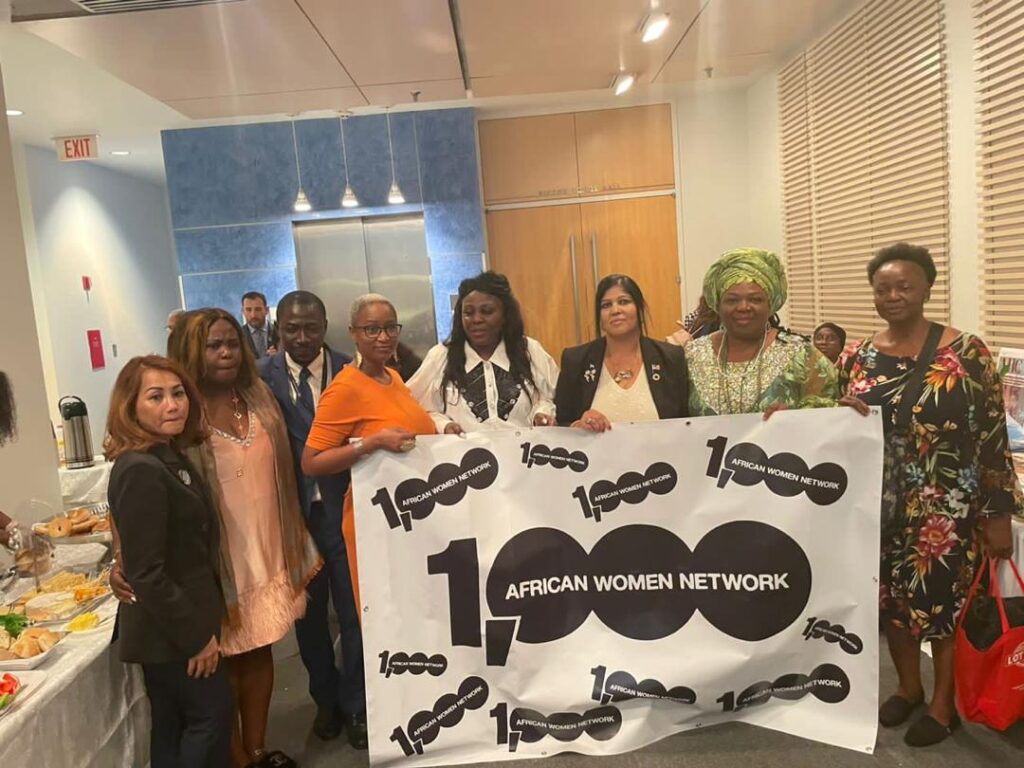
No one will be at peace, no one will be able to enjoy their own wealth, no one will have peace of mind as long as the projections say that 575 million people will live below the poverty line in 2030. The PSE predicts the emergence of Senegal in 2035 if we do not rectify the gap in professional qualifications. Regardless of oil, gas, and new cities, nothing will stop demonstrations against injustice.